A New, Ancient Monster Uncovered: The Cretaceous Kraken
When imagining a dominant, apex predator of the Cretaceous era, one might picture the Mosasaurus feeding show from Jurassic World. A gigantic, crocodile-like lizard leaping from the water, dwarfing its great white shark prey.
But last week, researchers from Japan revealed a newly-uncovered, massive top predator in these ancient oceans. They might even be the largest animals in the Cretaceous oceans.
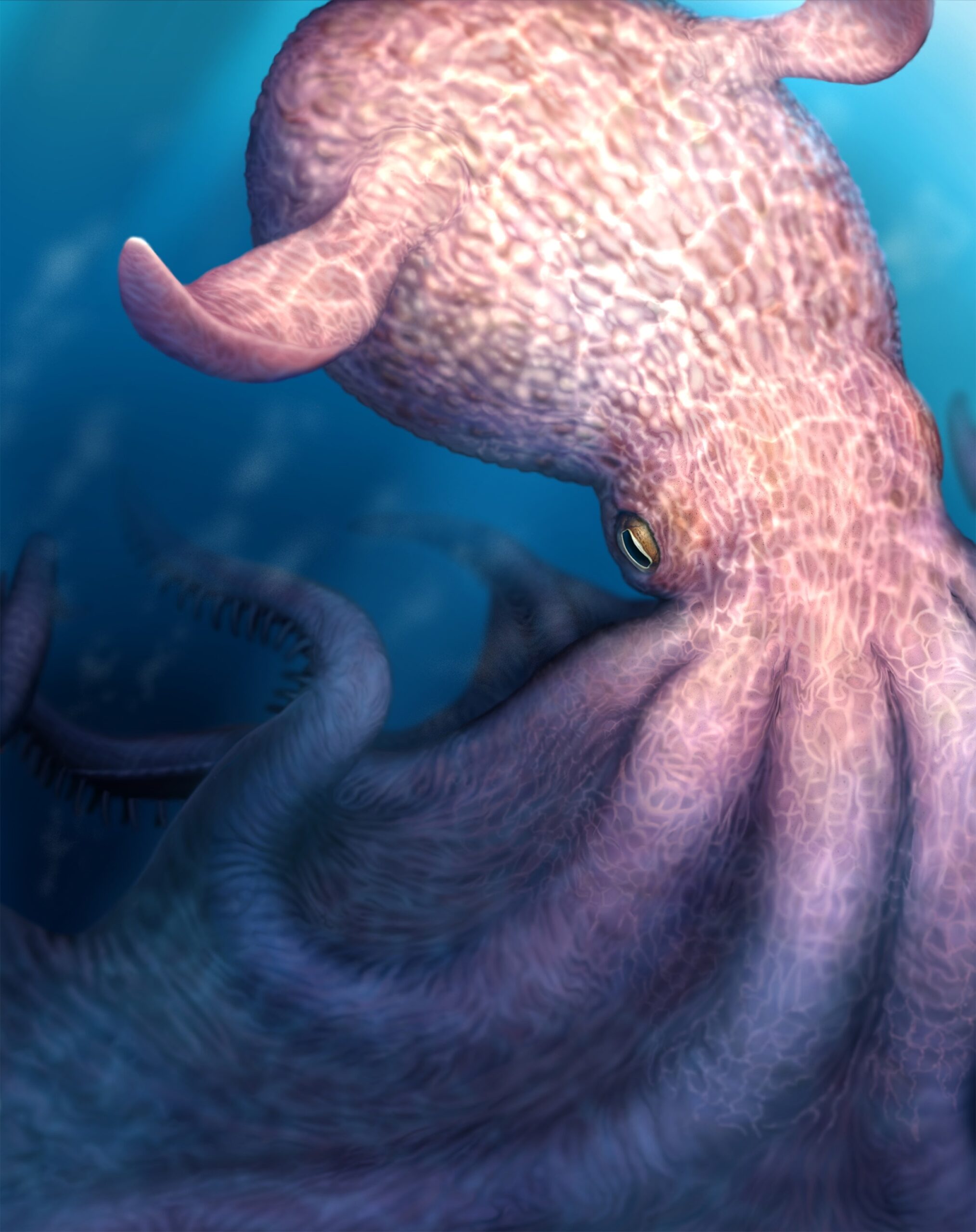
Meet the Cretaceous Kraken: Nanaimoteuthis haggarti
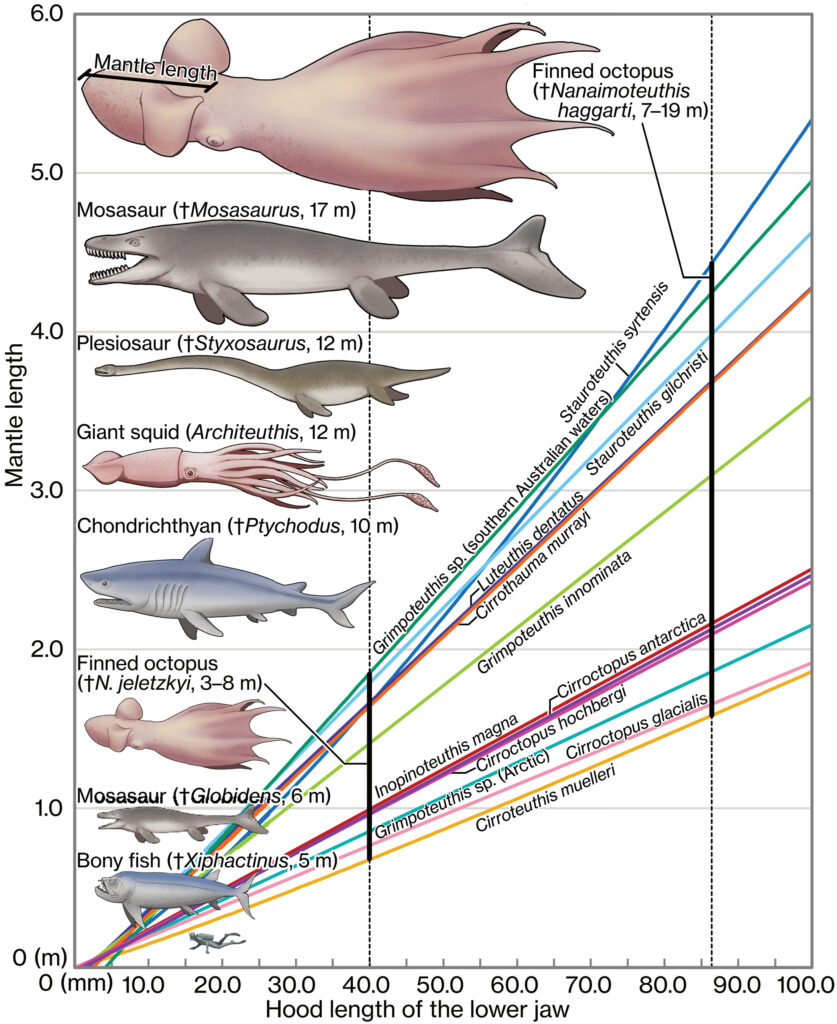
Body size estimation of N. haggarti and N. jeletzkyi, compared to other Cretaceous predators (Mosasaurus, Styxosaurus, Ptychodus, Globidens, and Xiphactinus), a modern giant squid (Architeuthis), and a human diver at the bottom. The colored lines show the relationship between hood length of the lower jaw and the mantle length of currently-living finned octopus relatives of the Nanaimoteuthis species. Image retrieved from Science (Ikegami et al., 2026).
The New Giants of the Ancient Sea:
Following an analysis of fossilized octopus beaks dating from 100 to 72 million years ago, a research team led by Shin Ikegami and Yasuhiro Iba presented two new species of ancient octopus: Nanaimoteuthis jeletzkyi and Nanaimoteuthis haggarti.
The researchers analyzed the size of the fossilized jaws. Using living octopus relatives as a reference, they developed an estimate of the total body length of the new species.
N. jeletzkyi, the smaller and older of the two species, likely reached between 2.8 to 7.7 meters (9.2 to 25.3 feet). The behemoth squid, N. haggarti, achieved a total length of between approximately 6.6 to 18.6 meters (21.7 to 61 feet).
Large reptiles like Tyrannosaurus rex and Quetzalcoatlus ruled the land and skies during the Cretaceous period. But, the previously-assumed dominance of large, marine vertebrates like mosasaurs, plesiosaurs, and chondrichthyans (i.e. sharks) is no longer as certain.
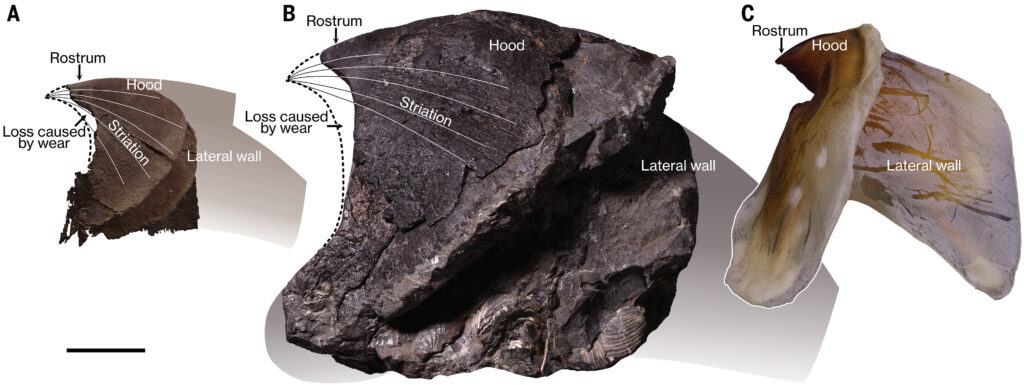
(A and B) Fossilized jaws from both newly-discovered Cretaceous-era octopodes, N. jeletzkyi (A) and N. haggarti (B). (C) shows the corresponding jaw of an extant giant squid, Architeuthis dux. Shadowed areas around the fossilized jaws show reconstructed areas of the jaw. Dotted lines show regions lost to natural wear from use observed in more mature specimens. Image retrieved from Science (Ikegami et al., 2026).
An Intelligent Predator:
Modern cephalopods are famous for their intelligence. However, the research team from Japan believes this trait isn’t intrinsic to just living octopuses.
The fossilized jaws showed evidence of asymmetric loss, which indicates lateralized behavior. Lateralization refers to the tendency of intelligent organisms to favor one side of the body over the other. This trait has been observed in modern octopuses, as well as many species of vertebrates (including humans–I am right-handed).
Lateralization has been linked to highly developed brains and cognition, which indicates that the massive, ancient octopuses possessed advanced intelligence.
Larger beaks from older octopuses showed more extreme amounts of wear compared to smaller beaks from younger individuals. Specific wear patterns reveal that these ancient predators had an extremely strong bite force. This indicates that they likely consumed large prey with harder skeletons.
Why Beaks?
Why are researches only using fossil beaks? Couldn’t they look at fossils of the entire body?
Octopuses are comprised primarily of soft tissue, which does not fossilize well. But, their beaks are made of chitin, a hard, protein-based structural component also found in insect and crustacean exoskeletons. This material fossilizes much more readily than soft tissue, leaving the beaks behind like a puzzle piece for a modern paleontologist.
The previously-known genus Nanaimoteuthis is a finned octopus (suborder Cirrata). Five currently-living families within this order have elongated bodies, while only one has a short-bodied form (Opisthoteuthidae, the umbella octopuses–like the adorable, deep sea flapjack octopus).
Nanaimoteuthis have elongated bodies. To determine the potential length of the organisms based on their beaks, researches calculated the maximum mantle length of the Nanaimoteuthis specimens based on the size of their jaws. Then, using ratios derived from modern elongated-body Cirrata relatives, the researchers calculated the total length of the ancient specimens.
A Massive Trend:
N. haggarti specimens were found in younger sediments (86 to 72 million years old) than N. jeletzkyi (100 to 72 million years old). This indicates that trends during this era likely favored the evolution of gigantic octopuses.
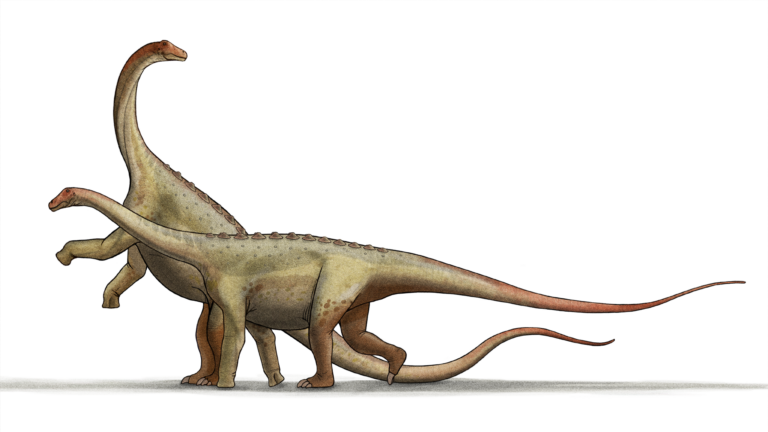
On land, the southern hemisphere’s biggest dinosaurs lived during this era, including the sauropod group Titanosauria. But, what may have favored Cretaceous gigantism? Researchers aren’t entirely sure. Some speculate that it may be related to atmospheric gas composition, while others posit that it might be the result of an evolutionary arms race between predator and prey.
Nanaimoteuthis lived during an era of ocean giants. Mosasaurs, which also lived in the late Cretaceous era, were among the largest known predators in the ancient seas. Some of the oldest known mosasaur fossils date back to 94 million years ago. Could the emergence of this group have contributed to the trend towards increasing size observed between N. jeletzkyi and N. haggarti?
Unfortunately, I’m no paleontologist! But maybe, as we continue to learn more about these exciting new (and very old) octopuses, more dynamics of the ancient, Cretaceous seas will be revealed. How exciting!
Love your latest!! Always learn something new!! (actually lots new!) JT