What Makes Seafood Sustainable?
This post follows up on The One Resource You Need to Make Sustainable Seafood Choices. Check that post out to learn about using the Monterey Bay Aquarium’s Seafood Watch program to learn how to make sustainable seafood choices!
What Exactly Does “Sustainable Seafood” Mean?
Let’s take a deep dive into the science behind environmentally friendly seafood. Seafood Watch is very transparent about what factors make fisheries and aquaculture operations more or less sustainable on their webpage.
Wild Capture:
Some solutions that can increase the sustainability of wild-capture fisheries include:
- Improving fisheries management and enforcement practices.
- Gear modifications to reduce bycatch and limit damage to the environment.
- Adjusting fishing strategies to limit fuel usage.
- Improving traceability from the point of capture to the final sale of the fish.
In an ideal wild-capture fishery, populations are able to replenish themselves. They should not be fished at a rate that is unsustainable relative to reproduction rates. In addition, fishing gear should minimize harm to the habitat and to non-target species.
Management and Illegal Fishing:
Through frequent stock assessments, researchers are able to better understand if wild populations are being overfished. If so, management organizations can limit fishing efforts through several methods: implementing total allowable catch limits, restrictions to fishing gear, seasonal closures, and size limits.
Estimates state that 10 – 26 million tons of fish are caught illegally each year. This contributes to overfishing, as unreported fishing cannot be factored into management plans. Improvements in enforcement, monitoring, and traceability can mitigate this issue and reduce illegal, unregulated fishing efforts.
Traceability:
Traceability allows us to understand the supply chain from the point when the fish was caught to when it’s on your plate. Certified seafood requires that the product comes from known supply chains, improving transparency.
For example, in Germany, I can type a code printed on my seafood packaging into Aldi’s transparency website (here’s the can of sardines I ate today for lunch!). Then, I’m able to see information about where and how the fish was caught. With this, I’m able to check on Seafood Watch and see the product is listed as a Good Alternative (Yellow-Tagged) item. This level of transparency allows me to be a more informed consumer.

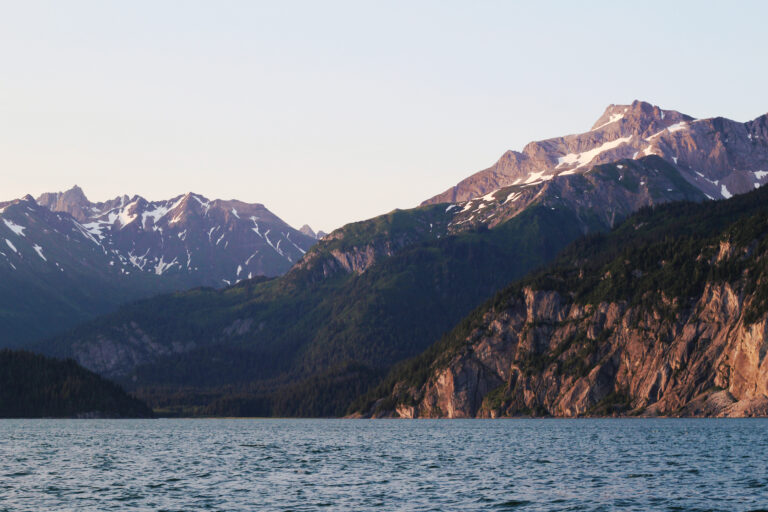
My early morning view while conducting halibut population surveys in fisheries science. The orange ropes on either side have streamers to deter seabirds. This method has reduced albatross deaths by 89% and other seabird deaths by 77% in the Alaskan groundfish fishery. Photo captured by me in southeast Alaska, ©LivInSeas, 2021
Bycatch Reduction:
Certain types of fishing gear are more likely to have higher catch rates of non-target species than others. Advancements in regulations and fishing gear have shown success over time in reducing bycatch. Certain gear types, like buoy gear in the California swordfish fishery or pole and line gear in the tuna fishery, greatly reduce the catch of non-target species.
Modifications to existing gear is also a positive solution. Streamers on longline vessels in the Alaskan groundfish fishery deter sea birds from going after bait and drowning while the hooks are being set. This modification reduced albatross deaths by 89% and other seabird deaths by 77% since its implementation in 2002.
Other modifications like sea turtle exclusion devices on trawls and dolphin pingers on nets also protect these organisms from unwanted mortality.
Within my experience in fisheries science, it was clear that bycatch is an issue that both scientists and fishermen want to avoid. The testing and implementation of management solutions like these are often a collaborative effort between fishermen, regulators, and researchers.
Habitat Preservation:
Some commercial fishing practices can be highly detrimental to seafloor habitats. Often, these methods impact slower-growing, foundational species, like deep-sea sponges and corals.
Fishing methods like traps or pots are far less destructive to the seafloor than methods like bottom-trawling. However, traps and pots are more likely to get lost and continue to “ghost fish” for marine life. In addition, they can (infrequently) result in entanglements with marine mammals and sea turtles. Modifications can mitigate both of these issues, including the use of biodegradable materials, regional or temporal closures, or technological advances like weak links or remote control release mechanisms. Traps and pots are considered to be a low impact and highly selective alternative to more environmentally destructive fishing methods, when properly managed.
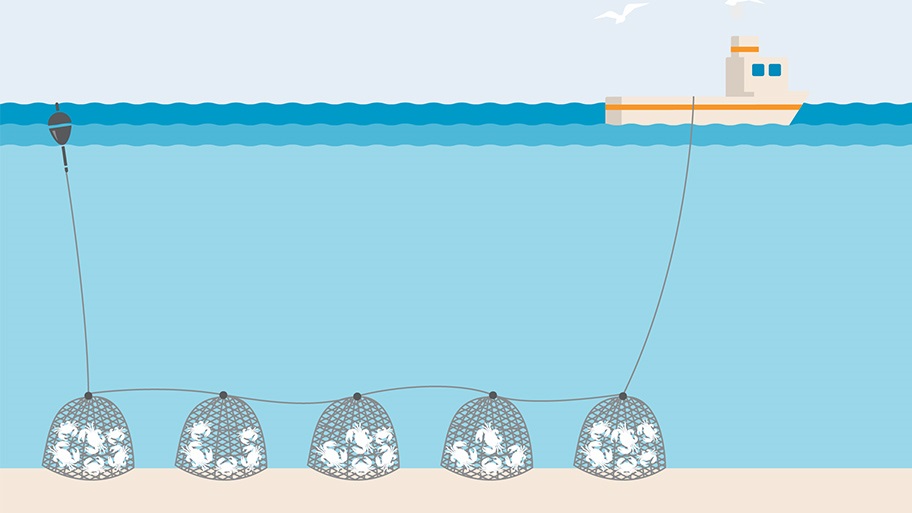
An illustration of fishing traps. Image sourced from the Marine Stewardship Council.
Human Rights:
Labor abuse is a known issue in the seafood industry. Some larger vessels that operate in the high seas, regions of limited governance and enforcement, do not ensure safe and just working conditions. Seafood Watch has developed the Seafood Social Risk Tool. The aim of this tool is to identify risk factors and inform consumers on what seafood options are less likely to come from sources where human trafficking and forced labor are involved.
Aquaculture:
Using Wild Fish as Food:
While aquaculture can alleviate fishing pressure on wild fish populations, certain practices can make it more or less sustainable. Often, fish feed is produced using wild-caught fish, like sardines and anchovies.
Yes, you read that right.
As an “alternative” to wild-caught fish, farmed fish are still often fed with wild-caught fish. Millions of tons of wild fish are caught annually just to feed farm-raised species.
Currently, researchers are investigating alternative ingredients that could provide the same nutritional value as fishmeal. Utilization of insects or algae as replacements in farmed fish diets could reduce pressures on wild fish stocks.
Alternatively, many farmed species like catfish and carp do not require diets heavy in fishmeal. Aquaculture production of catfish, for example, has a much smaller environmental footprint than aquaculture production of salmon. U.S. farmed catfish is considered “Super Green” by Seafood Watch, and no fishmeal or fish oil are used in their feed.
I could actually mention how great U.S. farmed catfish are under every one of these aquaculture mini-sections, but then it’ll sound like I’m sponsored by catfish. I wish! Instead, I’ll link this page on Seafood Watch for further reading for any interested parties.
Pollution and Disease:
Aquaculture operations may also release pollutants into the external environment or spread disease to wild populations. Fish farms are often connected with the external environment, whether it be net pens at sea or ponds that drain into waterways. These issues can be mitigated through better wastewater management and safe usage of antibiotics.
Habitat Destruction:
In addition to pollution, aquaculture efforts can also physically impact local ecosystems. Ecologically-important habitats like mangroves or wetlands are often cut down or modified to make room for new farms. Mangroves not only benefit humans by sheltering coasts from storms but also act as nursery habitats for marine life. Wetlands can also buffer against storm surge. Removing these important habitats doesn’t just affect the ecosystem, but also the humans living in close proximity.
Farmed Fish Escapes:
Lastly, the escape of fish from farms can introduce non-native, diseased, or genetically-unsound individuals into the environment. This can cause large negative impacts to native species. Non-native farm escapees can increase competitive pressures on native fish, reducing the available food and habitat.
Farmed fish escaping into their native habitats isn’t ideal either. Wild fish face strong selective pressures from the day they hatch as fry until they mature. Farmed fish do not face these same selective pressures that ensure only the fittest survive. As a result, the genetic makeup of offspring they might produce is less fit for surviving in the wild. This weakens native fish populations over time.
The United Nations estimates that seafood provides three billion people worldwide with essential nutrition. But in order to feed our growing population, we must ensure we can do so without causing excess damage to the environment. Ultimately, between aquaculture and wild-capture fisheries, we must tackle these sustainability challenges to ensure that future generations will have access to these resources.
I always got to see the nicest sunsets while working in fisheries science. Photo captured by me in Glacier Bay National Park, Alaska. ©LivInSeas, 2021