Species Spotlight: Smalleye Pacific Opah
Opah are a strikingly beautiful species of fish I always hoped to see while conducting fieldwork in fisheries science. Sadly, luck was never on my side.
When I started my LivInSeas science communication and art accounts to share my love of marine biology with equally passionate people, I knew early on that they were a species I wanted to paint! Opah are not only visually stunning, but also physiologically and behaviorally fascinating.
On first glance, they may appear clumsy with their deep keel and narrow body, but opah are actually graceful pelagic predators built for a life of high speed just like tuna and swordfish.
Spoilers ahead: by the end of this post, you’ll hopefully be an expert on super exciting topics like labriform locmotion, why it’s so cool that this fish is a full-body endotherm, and why taxonomists have very difficult jobs!
Let’s dive in and learn more about the smalleye Pacific opah (Lampris incognitus)!
Range & Habitat:
The smalleye Pacific opah are found in the eastern North Pacific, and are caught primarily near California coastlines by fishermen. They are found between depths of 50 and 500 meters, or 160 to 1640 feet, and they spend much of their time in the twilight zone of the open ocean, just beyond where the last sunlight fades into darkness.
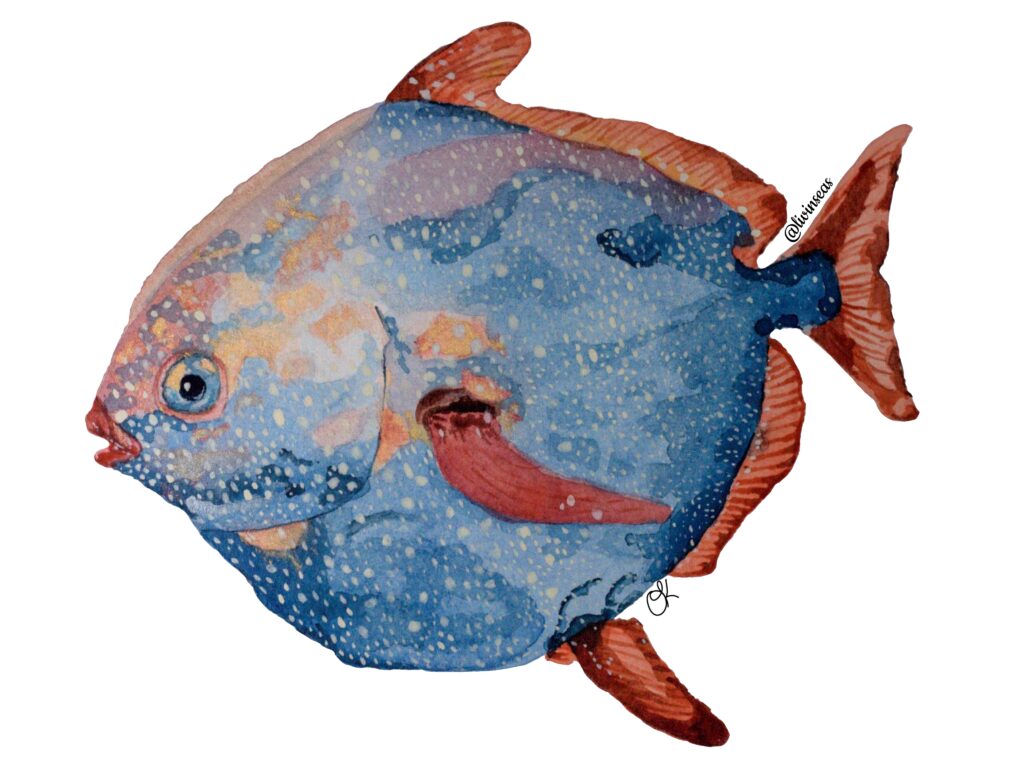
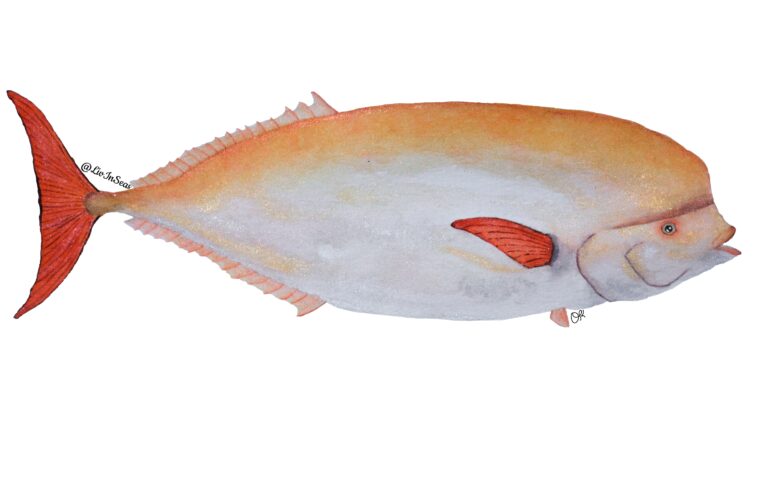
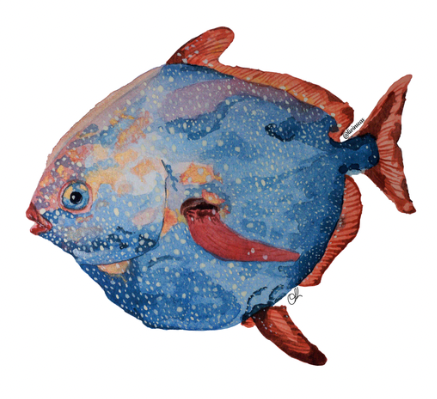
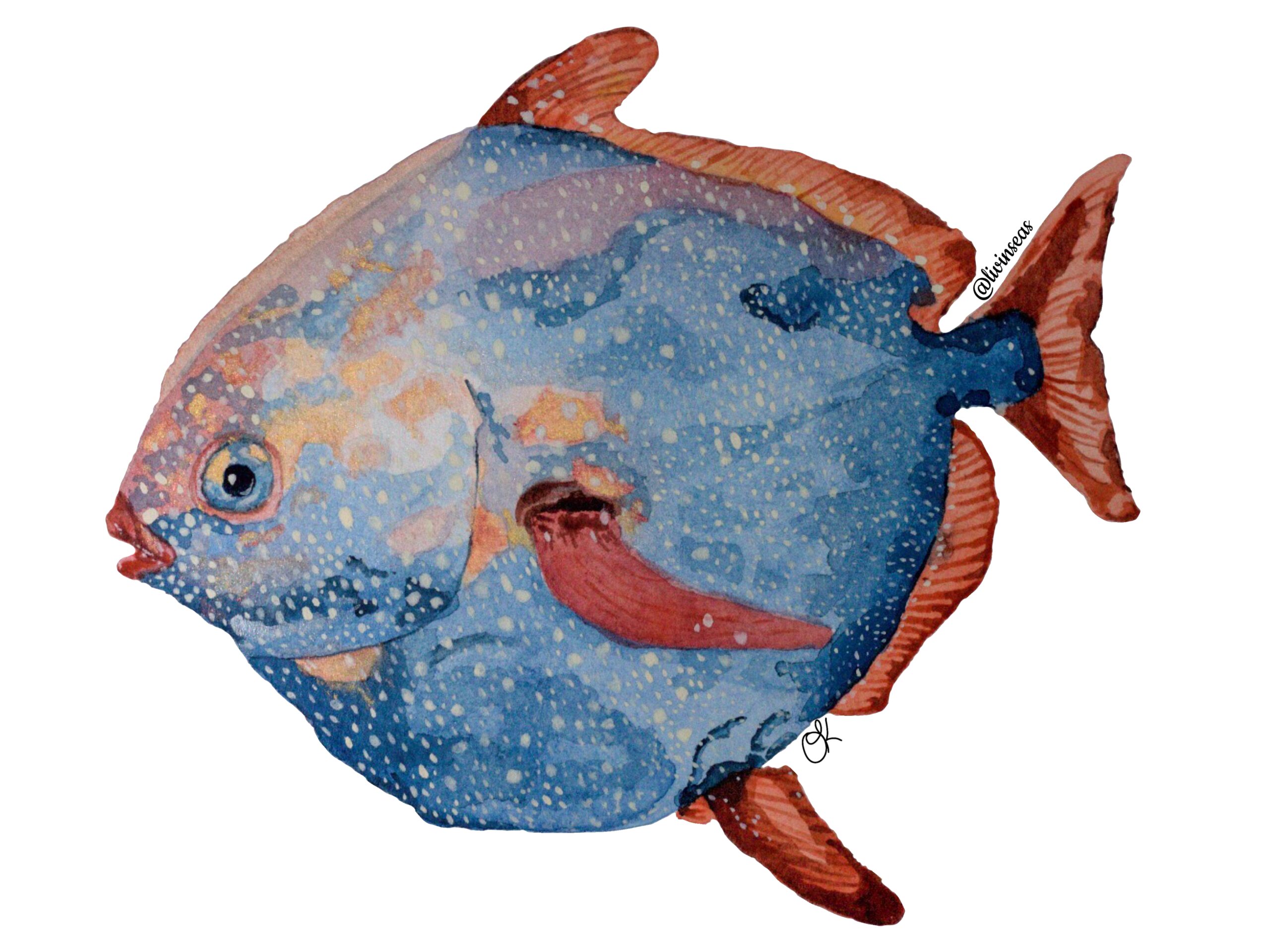
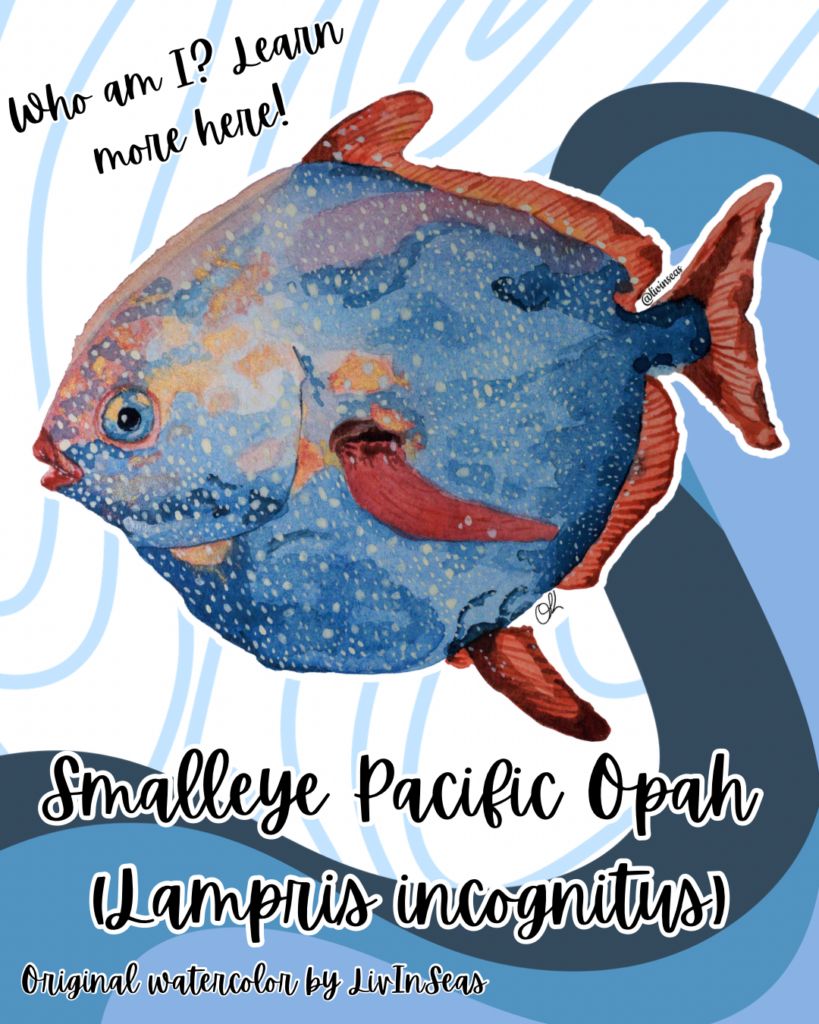
Water color painting of a Smalleye Pacific Opah (L. incognitus) by me. ©LivInSeas, 2025
Morphology:
Smalleye Pacific Opah have a steel grey dorsal (upper) surface, and their ventral (lower) surface is described as bright silver. Their entire body is covered with small, irregular spots, and their fins are bright vermilion. The fish has a lunate caudal fin, or tail fin, shaped similarly to a tuna’s tail. Dorsal and caudal fins are occasionally tipped with white.
The maximum documented length of a smalleye Pacific Opah by researchers is 123 centimeters, or 48.4 inches. However, unconfirmed reports state that the fish can reach a maximum length of 183 centimeters or 72 inches.
Physiology:
Opah species undergo rapid, vertical dives for foraging purposes. But, compared to other groups who also routinely participate in feeding dives like tunas and lamnid sharks (including white sharks, mako sharks, and porbeagle sharks), opah have special physiological traits that are particularly advantageous for sustaining high activity levels in cold, deep waters.
Scientists discovered that opah exhibit “whole-body endothermy“, meaning that they conserve metabolic heat and maintain their body temperatures higher than the surrounding environment throughout their entire body. This trait is found in mammals and birds, but whole-body endothermy is extremely rare in fish.
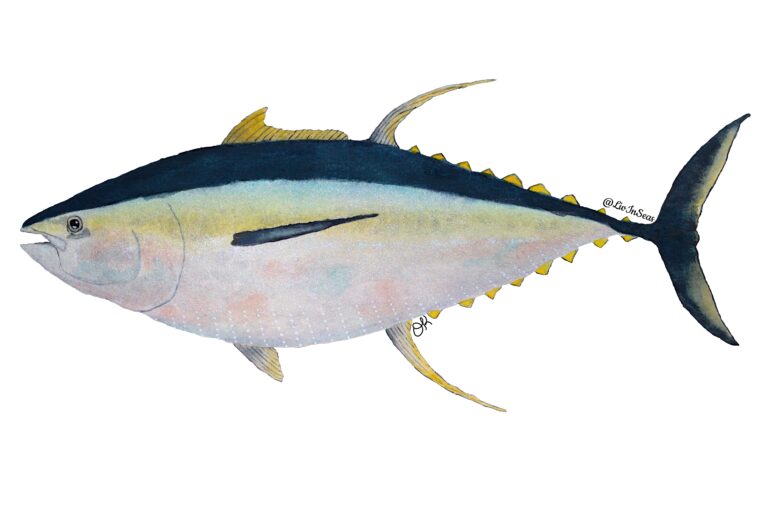
Other groups of fish, such as tuna, lamnid sharks, and billfishes (swordfish and marlins), exhibit regional endothermy. They are able to retain heat around certain regions of the body, such as their aerobic swimming musculature, eyes, or brain. However, as much of their body still remains at ambient temperature, it is not considered to be whole-body endothermy.
Check out my post about yellowfin tuna, a regional endotherm, here!
Opah retain heat using counter-current heat exchange in the gills. These coupled vascular channels allow for heat to diffuse from warm blood leaving the core to cold blood returning to the core from exposed gas exchange surfaces.

A diagram illustrating co-current versus counter-current flow, and how counter-current vascular systems conserve heat (red) in fish. Cruithne9, CC BY-SA 4.0 <https://creativecommons.org/licenses/by-sa/4.0>, via Wikimedia Commons.
Opah sustain increased temperatures around their heart, which is insulated by fat. Researchers believe other deep-diving fish species face physical limitations during foraging dives from reduced heart function at lower temperatures.
A study using satellite tracking tags revealed that opah spend most of their time in deep waters without regular visits to surface waters to warm themselves. This indicates they have increased tolerance to colder, deeper waters compared to other species.
Beneficial effects of whole-body endothermy include increased muscle output and capacity, enhanced eye and brain capabilities, increased rates of digestion, and reduced detrimental impacts of cold temperatures on organ performance.
Locomotion:
Opah move using a lift-based, oscillatory movement of their pectoral fins (the red ones next to the gills in the image above–think wings or arms) for propulsion. This locomotive mode is referred to as “labriform locomotion“.
Most fish who utilize labriform locomotion live a much slower-paced lifestyle than opah. These include damselfish, surfperches, butterflyfish, rays, or wrasses. Scientists have proposed two contrasting modes of labriform locomotion: drag-based and lift-based thrust.
The musculature of opah indicates that they use their pectoral fins to maintain high rates of speed, thus employing the lift-based thrust mode. The dorsal and anal fins of opah are able to retract into grooves to minimize drag and maximize speed.
They also have lunate caudal fins, similar to tuna. Lunate fins form a very narrow, somewhat forked shape, and maximize thrust and reduce drag.
These traits allow opah to maintain high velocities with reduced drag while hunting prey at high speeds. These fish are built for sustaining speed in deep sea environments hostile to other fast, predatory fish species.
Taxonomy:
Researchers previously believed that there were only two species of opah (members of genus Lampris). But following rigorous morphological and molecular analysis, taxonomists in the late 2010’s proposed that there are actually six species of opah. The smalleye Pacific Opah was previously thought to be a member of species Lampris guttatus, but is now considered to be Lampris incognitus.
A taxonomist is a scientist whose specialization focuses on the classification and identification of living organisms. They collect samples from a vast number of organisms and analyze many different factors to make their assessments, including morphological characteristics, molecular traits such as DNA, and ecological characteristics.
The six species of opah are found across the Pacific, Atlantic, Indian, and Southern Oceans, as well as the Mediterranean Sea.
Pin this post to read later!
References:
- Cooper, R. (2019). Characterizing patterns of opah (Lampris spp.) catch-per-unit-effort in the eastern North Pacific Ocean.
- Franck, J. P., Slight-Simcoe, E., & Wegner, N. C. (2019). Endothermy in the smalleye opah (Lampris incognitus): a potential role for the uncoupling protein sarcolipin. Comparative Biochemistry and Physiology Part A: Molecular & Integrative Physiology, 233, 48-52.
- Giammona, F. F. (2021). Form and function of the caudal fin throughout the phylogeny of fishes. Integrative and Comparative Biology, 61(2), 550-572.
- Kimball, J. W. 15.3G: The Transport of Heat. Retrieved 16 March, 2026.
- Lampris incognitus – Underkoffler, Luers, Hyde & Craig, 2018. GBIF. Retrieved 22 September, 2025.
- Rafrafi-Nouira, S., Amor, M. M. B., Amor, K. O. B., Bdioui, M., & Capapé, C. (2021). FIRST SUBSTANTIATED RECORD OF OPAH, LAMPRIS GUTTATUS (OSTEICHTHYES: LAMPRIDIDAE), FROM THE TUNISIAN COAST (CENTRAL MEDITERRANEAN SEA). In Annales: Series Historia Naturalis (Vol. 31, No. 1, pp. 129-136). Scientific and Research Center of the Republic of Slovenia.
- Rosenblatt, R. H., & Johnson, G. D. (1976). Anatomical considerations of pectoral swimming in the opah, Lampris guttatus. Copeia, 1976(2), 367-370.
- Underkoffler, K. E., Luers, M. A., Hyde, J. R., & Craig, M. T. (2018). A taxonomic review of Lampris guttatus (Brünnich 1788)(Lampridiformes; Lampridae) with descriptions of three new species. Zootaxa, 4413(3), 551-566.
- Wegner, N. C., Snodgrass, O. E., Dewar, H., & Hyde, J. R. (2015). Whole-body endothermy in a mesopelagic fish, the opah, Lampris guttatus. Science, 348(6236), 786-789.
- Westneat, M. W. (1996). Functional morphology of aquatic flight in fishes: kinematics, electromyography, and mechanical modeling of labriform locomotion. American Zoologist, 36(6), 582-598.